What is Mental Arithmetic ?
- ‘Mental Arithmetic’ is a term used in Abacus for the calculations done in mind.
- Even large numbers can be calculated in mind, that too within seconds
- ‘Mental arithmetic’ improves student’s imagination skills
- Effective in cracking competitive time based tests.
- Mind calculation enhances the concentration level of child.
- Math Olympians is a course based on VEDIC MATHS.
- This course is specially designed for the generation of today.
- The Sutras apply to and cover almost every branch of Mathematics.
- They apply even to complex problems involving a large number of mathematical operations.
- Application of the Sutras saves a lot of time and effort in solving the problems, compared to the formal methods presently in vogue.
- Though the solutions appear like magic, the application of the Sutras is perfectly logical and rational.
- The computation made on the computers follows, in a way, the principles underlying the Sutras.
- The Sutras provide not only methods of calculation, but also ways of thinking for their application.
Vedic Math
- India has been a land of knowledge specially in Maths. The Sanskrit word Veda is derived from the root Vid, meaning to know without limit.
- The word Veda covers all Veda-sakhas known to humanity. The Veda is a repository of all knowledge, fathomless, ever revealing as it is delved deeper.
Swami Bharati Krishna Tirtha (1884-1960), former Jagadguru Sankaracharya of Puri developed methods and techniques for amplifying the principles contained in the aphorisms and their corollaries, and called it Vedic Mathematics. - He culled a set of 16 Sutras (aphorisms) and 13 Sub – Sutras (corollaries) from the Atharva Veda.
Benefits of Vedic Math
- Math Olympians is 10-15 times faster than normal math.
- Better and much improved Academic Performance in school and instant Results.
- Sharpens your mind, increases mental alertness and intelligence.
- Increases visualisaion and concentration power.
- Math Olympians is easy to understand, easy to apply and easy to remember.
Increases your speed and accuracy. - It encourages mental calculations and it is a good exercise for brain.
- Become a mental calculator yourself.
Course structure and Eligibility
Age Group: 10 years & above
No. of Levels: 6 + Bachelor’s of GG
No. of Classes: 1 class of 2 hours in a week.
Course Duration: 1 to 1.5 years
After completion of each level, an assessment test is taken.
Certificates are issued to every student after completion of a level.
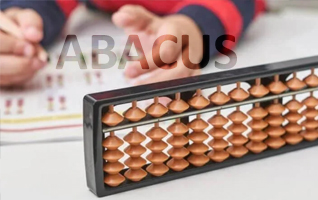
Abacus, a tool which consists of beads and rods, can be used to do complex arithmetic operations, such as addition, subtraction, multiplication, division, square root and cubic root. Children do these calculations in the physical rod and with constant practice and training, they can imagine an abacus in mind and perform arithmetic operations on a virtual abacus rapidly and precisely.
Why would one need to master mental abacus techniques?
Saves time on calculations
No need to have calculators
Keeps your brain sharp always
Improves confidence
So, what is so special about this mental abacus training? It is represented in visual working memory of an Abacus student by splitting the abacus into a series of columns, each of which is independently saved as a unit with its own detailed substructure. It certainly is an impressive and efficient approach, with the concentration, intensity and speed being very impressive.
Even though, Abacus is an ancient way of performing calculations, more research has been conducted in the recent years only especially on the mental abacus abilities helps the kids in enhancing the memory and other cognitive skills.
The studies have revealed that the proper Abacus training may result in qualitative changes in a child’s ability to represent numerical information through the development of a “mental abacus” and improve response inhibition. In addition, the mental abacus skills can be used to develop number concepts, increase efficiency in mathematical calculations, get substantial gains in numerical processing efficiency, and enhance the ability of students to apply mathematical skills to real-life scenarios.